Seven Icelandic Short Stories
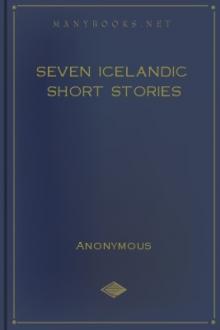
Seven Icelandic Short Stories
 Free Download
Book Excerpt
and Father and Son.
Nowadays, four fifths of the population live in villages and townships--where some light industry has sprung up--and, in Reykjavík alone, more than two fifths of the population are concentrated.
In the last fifty years, the occupations of the people and their culture have changed from being in many respects medieval, and have assumed modern forms. The earlier turfbuilt farmhouses have now been replaced by comfortable concrete buildings which get their electricity from a source of water power virtually inexhaustible. Many of these,--e. g. the majority of houses in Reykjavík--are heated by water from hot springs, so that the purity of the northern air is seldom spoilt by smoke from coal-fires. The reliable Icelandic pony--so dear to the farmer in New Iceland, and for long known as "a man's best friend"--has now for the most part come to serve the well-to-do who can afford to use it for their joy-rides, its place in farmwork being taken by modern agricultural mach
FREE EBOOKS AND DEALS
(view all)








Popular books in Short Story Collection



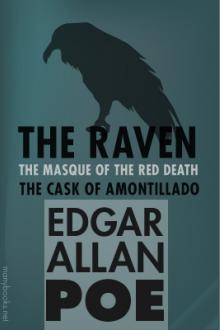
The Raven / The Masque of the Red Death / The Cask of Amontillado
by Edgar Allan Poe
Download
Read more
Readers reviews
5.0
LoginSign up

These are uniformly fine stories. Only the first is anonymous, the rest have authors from the last century.
They deal with Icelandic people: peasants, rather than heroes. All the characters have a strong sense of independence and honor, and most of them are a little crazy. I enjoyed When I Was On The Frigate the most; it was a story of a delirious captain trying to land a flimsy wooden boat on a rocky shore in heavy seas. But all the stories had great descriptions, a strong sense of place, and admirable characters.
Highly recommended.
They deal with Icelandic people: peasants, rather than heroes. All the characters have a strong sense of independence and honor, and most of them are a little crazy. I enjoyed When I Was On The Frigate the most; it was a story of a delirious captain trying to land a flimsy wooden boat on a rocky shore in heavy seas. But all the stories had great descriptions, a strong sense of place, and admirable characters.
Highly recommended.
- Upvote (0)
- Downvote (0)