Farewell to the Master
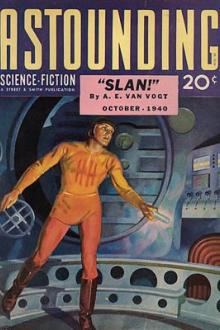
Farewell to the Master
 Free Download
Adapted to film in 1951 as The Day the Earth Stood Still.
Book Excerpt
d. He could almost remember verbatim his answer:
"No, Gnut has neither moved nor been moved since the death of his master. A special point was made of keeping him in the position he assumed at Klaatu's death. The floor was built in under him, and the scientists who completed his derangement erected their apparatus around him, just as he stands. You need have no fears."
Cliff smiled again. He did not have any fears.
A moment later the big gong above the entrance doors rang the closing hour, and immediately following it a voice from the speakers called out "Five o'clock, ladies and gentlemen. Closing time, ladies and gentlemen."
The three scientists, as if surprised it was so late, hurriedly washed their hands, changed to their street clothes and disappeared down the partitioned corridor, oblivious of the young picture man hidden under the table. The slide and scrape of the feet on the exhibition floor rapidly dwindled, until at last there were only the steps of the two guards walkin
FREE EBOOKS AND DEALS
(view all)




Popular books in Science Fiction, Short Story Collection, Post-1930

More books by H. G. Winter
(view all)
Readers reviews
3.6
LoginSign up

In spite of each formats much discussed flaws, the gestalt of each stand as an example of a thought provoking and enjoyable trail of the evolution of different artist's interpretation of a common theme. Everyone has a favorite and mine is the original, which was the last that I discovered. It was presented as a dramatic reading which was very well done. Simply put, it's all good!
- Upvote (0)
- Downvote (0)
This is one of the most well-written stories on this site. It is quite different from the film adaptation. Worth the read.
04/18/2014
I've always felt "The Day the Earth Stood Still" the superior effort. This story simply has too many clunks and jerks in it.
There is absolutely no need for Bates to have set his story in some vague, undescribed future where humans fill the solar system (but at the same time, only two spaceships have ever been built?? What the who now?) Nothing in the story requires a future setting and thus it only serves to distance the reader from the immediacy of the plot. Like the movie, he should have stuck to his own time and place and called a news photographer a "news photographer". "Picture man"...yeesh.
My second dissatisfaction comes from being a child of my era. Even in the late 1960's, the idea of a robot or machine intelligence being "The Master" wasn't that startling. Granted, the overlord machines (eg Colossus) were nasty and tyrannical. That leaves only the fact Gnut loved his servant-pet as the novel concept. And that idea fades with each decade of SF that goes by.
The third gripe is even more subjective and involves Bates' writing style. So I shan't bother you with that.
There is absolutely no need for Bates to have set his story in some vague, undescribed future where humans fill the solar system (but at the same time, only two spaceships have ever been built?? What the who now?) Nothing in the story requires a future setting and thus it only serves to distance the reader from the immediacy of the plot. Like the movie, he should have stuck to his own time and place and called a news photographer a "news photographer". "Picture man"...yeesh.
My second dissatisfaction comes from being a child of my era. Even in the late 1960's, the idea of a robot or machine intelligence being "The Master" wasn't that startling. Granted, the overlord machines (eg Colossus) were nasty and tyrannical. That leaves only the fact Gnut loved his servant-pet as the novel concept. And that idea fades with each decade of SF that goes by.
The third gripe is even more subjective and involves Bates' writing style. So I shan't bother you with that.
06/28/2013
This is of my favorite SF stories. To me, the entire point of the story is that zinger at the end. While I enjoy the 1951 movie "The Day the Earth Stood Still" I consider it only loosely based on this story precisely because it leaves out this crucial ending. I haven't seen the latest movie, but it seems it's more a remake of the 1951 film than a another take on this story.
This story has always reminded me of "We Can Remember it For You Wholesale" by Philip K Dick, which also has a great zinger at the end. Interestingly, that story was also made into a movie (Total Recall [1990]) that skips the zinger. But again, the movie is ok.
This story has always reminded me of "We Can Remember it For You Wholesale" by Philip K Dick, which also has a great zinger at the end. Interestingly, that story was also made into a movie (Total Recall [1990]) that skips the zinger. But again, the movie is ok.
10/20/2009
I disagree with Gil that the 1951 movie left out the surprise punchline. While that ending was not used as-is, it was implicate in the background that Klaatu gave in his speech to the Scientists. Since I do not want to give away that ending I can not be more explicate but if you think about it you can see how that ending was morphed into the scenario about the status of the Robots used in the movie.
06/05/2009
Farewell to the Master is a tale that has one major shortcoming in the technological arena, but it makes an intriguing companion to the 1951 film. The differences between the story and its film version does make for an interesting comparison. In this reviewer's opinion, the ending of the story is much superior to the 1951 film.
Hands down, even with its flaws, the story is still superior to the 2009 anti-humanity film travesty.
Hands down, even with its flaws, the story is still superior to the 2009 anti-humanity film travesty.
05/26/2009
I respectfully disagree with Gil: this is one of those rare cases where the film adaptation was far better than the story. Harrison's feeble technical premise--that a living creature can be recreated from a flawed sound recording--was wisely discarded by the screenwriters, and the other changes they made to the story were all to the good.
"Farewell to the Master" is a mediocre story at best--one of the weaker efforts from a writer who was capable of much better work. It's worth reading mainly because it inspired such an outstanding film.
"Farewell to the Master" is a mediocre story at best--one of the weaker efforts from a writer who was capable of much better work. It's worth reading mainly because it inspired such an outstanding film.
04/17/2009
A great story, far better than the movie later made from it called The Day the Earth Stood Still, which entirely and inexplicably changed the entire thrust and left off the kick in the tail that you *never* see coming.
04/12/2009