People Like That
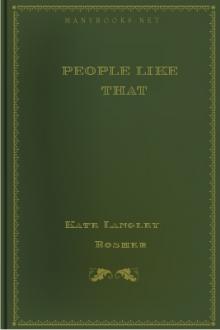
People Like That
A Novel
 Free Download
Book Excerpt
led a good deal, speaks excellent French, dances perfectly,
dresses admirably, and has charming manners when she wishes. I love
her very much, but I no longer feel it is my duty to live with her.
I am not living in Scarborough Square because I feel it is my duty to live here. Thank Heaven, I don't have to tell any one why I am here!
CHAPTER III
Kitty's mother had been dead only a year when Aunt Matilda, who had adopted me several years earlier on the death of my parents, married her father. I was twelve and Kitty eight when the marriage took place, and with canny care I tried to shield her from the severity of Aunt Matilda's system in rearing a child. I had been reared by it.
I owe much to Aunt Matilda. She sent me to good schools, to a good college; took me with her on most of her trips abroad, and at twenty presented me to society, but she never knew me, never in the least understood the hunger in my heart for what it was not in her power to give.
FREE EBOOKS AND DEALS
(view all)









Popular books in Fiction and Literature





More books by Kate Langley Bosher
(view all)

Readers reviews
3.0
LoginSign up

A single woman from a wealthy family uses her inheritance to buy a house in a working-class neighborhood in the city. She wants to get to know "people like that" better - their struggles, working conditions, health care, etc.- to see how she can offer some help. At first her friends are appalled, but she slowly makes them develop some empathy for their fellow man. The novel can get a little "preachy" at times, but the good plot and interesting characters make up for that.
- Upvote (0)
- Downvote (0)