Our Stage and Its Critics
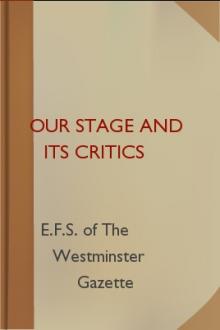
Our Stage and Its Critics
 Free Download
Book Excerpt
so little? With Shakespeare and some of his commentators he
ought to be at home; the "Paradoxe sur le Comédien" he can hardly
escape, and the works of some of the modern English and latest French
critics may not be overlooked. Of course he must have read and
considered a large number of plays, and the theories on which they are
based. Politics he may almost neglect unless there be successors to
_John Bull's Other Island_, though he will have to keep abreast of the
facts and fancies of modern life, including, to some extent, political
matters. How he is to study the customs, usage and manners of polite
society among the upper ten thousand it is hard to say. Not a few of us
are weak on this point, and feel ill at ease when dealing with the
nuances of the customs of Mayfair. The study of books on Savoir
Faire and the Manners of Polite Society certainly will give very little
assistance.
Lastly, in this catalogue, which is far from exhaustive, he must study the art of writing, so that he may a
FREE EBOOKS AND DEALS
(view all)








Popular books in Drama, Fiction and Literature

Readers reviews
0.0
LoginSign up
Be the first to review this book