Camp Life in the Woods and the Tricks of Trapping and Trap Making
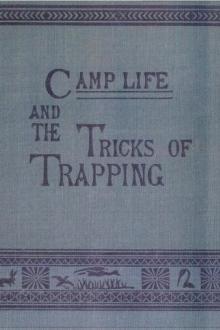
Camp Life in the Woods and the Tricks of Trapping and Trap Making
 Free Download
Containing comprehensive hints on camp shelter, log huts, bark shanties, woodland beds and bedding, boat and canoe building, and valuable suggestions on trappers' food, etc. With extended chapters on the trapper's art, containing all the "tricks" and valuable bait recipes of the profession; full directions for the use of the steel trap, and for the construction of traps of all kinds; detailed instructions for the capture of all fur-bearing animals; valuable recipes for the curing and tanning of fur skins, etc., etc.
Book Excerpt
un-ways or By-paths.--How Utilized by the Trapper.--How Detected.--Favorable Localities for the Setting of the Steel Trap.--Natural Advantages.--Entrapping animals through their Sense of Smell.--Remarkable Power of Scent Baits.--Their great value in the Capture of the Beaver.--Caution in Handling the Steel Trap.--Effect of the Touch of the Hand.--Buckskin Gloves a Necessary Requisite.--MEDICINES, OR SCENT BAITS.--Their Great Importance in the Art of Trapping.--CASTOREUM OR BARKSTONE.--How Obtained.--Castoreum Composition.--Recipe for Making.--How Used.--MUSK--ASSAFOETIDA.--OIL OF RHODIUM.--FISH OIL.--Its General Use in the Capture of Aquatic Animals.--Valuable Recipe for its Manufacture.--OIL OF SKUNK.--How Obtained.--How Eradicated from Hands or Clothing.--OIL OF AMBER.--OIL OF AMBERGRIS.--OIL OF ANISE.--Its General Use as a "Universal Medicine."--SWEET FENNEL.--CUMMIN--FENUGREEK--LAVENDER--COMPOUND MEDICINE--THE TRAIL--Its Object and Value.--Various Modes of Making.--HOW TO TRAP.--General Remarks.--THE FOX.
FREE EBOOKS AND DEALS
(view all)






Popular books in Non-fiction, Instructional, Nature



More books by William Hamilton Gibson
(view all)
Our Edible Toadstools and Mushrooms and How to Distinguish Them
by William Hamilton Gibson
Download
Read more
Readers reviews
1.0
LoginSign up

interesting book, but virtually useless without the illustrations
- Upvote (0)
- Downvote (0)