
Satires, Epistles, and Art of Poetry
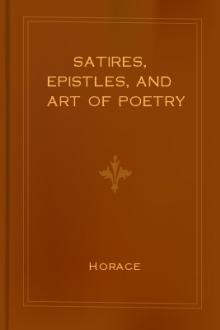
Satires, Epistles, and Art of Poetry
 Free Download
Translated by John Conington, M. A.
Book Excerpt
f writing. Here it is that the imitator has the advantage of the
translator: a certain parallelism between his own time and the time
of the author he imitates is postulated in the fact of his imitating
at all, and if he is a dexterous writer, like Pope or Johnson, he is
sure to be able to introduce a number of small equivalents, some of
them perhaps actual improvements on the original, while he is at
liberty to throw into the shade those points of which he despairs of
being able to make anything. A translator has three courses open to
him, to translate more or less verbally, so as to run the risk of
being unintelligible to a reader unacquainted with the original, to
generalize what is special, and to borrow something of the
imitator's licence, introducing a modern speciality in place of an ancient. Here, as I have found on other occasions of the kind, to be allowed a choice of evils is itself a matter for selfcongratulation.
To be shut up entirely to one or other of these
resources would be a ser
imitator's licence, introducing a modern speciality in place of an ancient. Here, as I have found on other occasions of the kind, to be allowed a choice of evils is itself a matter for selfcongratulation.
To be shut up entirely to one or other of these
resources would be a ser
FREE EBOOKS AND DEALS
(view all)











Popular books in Poetry, Classic

More books by Horace
(view all)

Readers reviews
0.0
LoginSign up
Be the first to review this book
Popular questions
(view all)Books added this week
(view all)
No books found