Great Men and Famous Women, Vol. 7
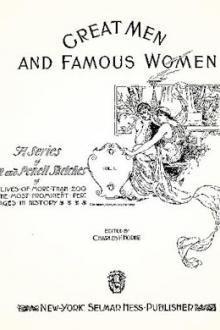
Great Men and Famous Women, Vol. 7
A Series of Pen and Pencil Sketches of the Lives of More Than 200 of the Most Prominent Personages in History
 Free Download
Book Excerpt
erse elements, and his Thearchy is as remarkable a work of art as the terrestrial machinery of the poem. He has profoundly impressed upon it the human likeness often called anthropomorphic, and which supplied the basis of Greek art. He has repelled on all sides from his classical and central system the cult of nature and of animals, but it is probable that they kept their place in the local worships of the country. His Zeus is to a considerable extent a monarch, while Poseidon and several other deities bear evident marks of having had no superior at earlier epochs or in the countries of their origin. He arranges them partly as a family, partly as a commonwealth. The gods properly Olympian correspond with the Boulê or council upon earth, while the orders of less exalted spirits are only summoned on great occasions. He indicates twenty as the number of Olympian gods proper, following in this the Assyrian idea. But they were far from holding an equal place in his estimation. For a deity such as Aphrodite b
FREE EBOOKS AND DEALS
(view all)






Popular books in History, Biography




Readers reviews
0.0
LoginSign up
Be the first to review this book