
The Open Secret of Ireland
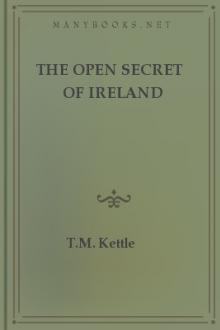
The Open Secret of Ireland
 Free Download
Book Excerpt
ic and most equitable system in the world. They kept out
the Council of Trent, and the Spanish Armada. They kept out the French
Revolution, and Napoleon. They kept out for a long time the Kantian
philosophy, Romanticism, Pessimism, Higher Criticism, German music,
French painting, and one knows not how many other of the intellectual
experiments that made life worth living, or not worth living, to
nineteenth-century Europe. Their insularity, spiritual as well as
geographical, has whetted the edge of a thousand flouts and gibes.
"Those stupid French!" exclaims the sailor, as reported by De Morgan:
"Why do they go on calling a cabbage a shoe when they must know that
it is a _cabbage?_" This was in general the attitude of what Mr Newbolt
has styled the "Island Race" when on its travels. Everybody has laughed
at the comedy of it, but no one has sufficiently applauded its success.
The English tourist declined to be at the trouble of speaking any
foreign tongue whatsoever; instantly every hotel and restauran
FREE EBOOKS AND DEALS
(view all)


Popular books in Politics, History
More books by T. M. Kettle
(view all)
Readers reviews
0.0
LoginSign up
Be the first to review this book
Popular questions
(view all)Books added this week
(view all)
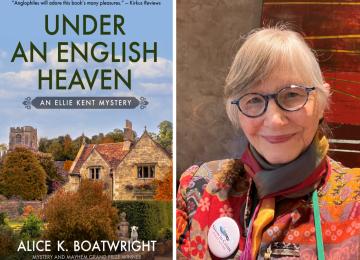
FEATURED AUTHOR - Alice K. Boatwright is the author of the Ellie Kent mysteries, which debuted with Under an English Heaven, winner of the 2016 Mystery and Mayhem Grand Prize for Best Mystery. The series continues with What Child Is This? and In the Life Ever After. Alice has also published other fiction, including Collateral Damage, three linked novellas about the Vietnam War era; Sea, Sky, Islands, a chapbook of stories set in Washington’s San Juan Islands; and Mrs. Potts Finds Thanksgiving, a holiday parable… Read more