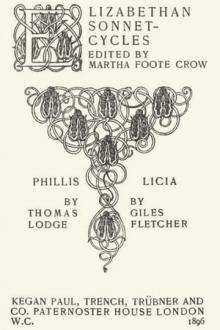
Elizabethan Sonnet Cycles
Elizabethan Sonnet Cycles
Phillis -- Licia
 Free Download
Book Excerpt
in her disdain, he cries out impulsively:
"Burst, burst, poor heart, thou hast no longer hope!"
Even when re-moulding the familiar pastoral conceits, he makes the fancies his own and gives to them a unique touch and spirit. Mere conventions he rates at their proper value. His pen shall not "riot in pompous style." He claims a brighter aspect for his poetical devotion than his fellow-sonneteers manifest:
"No stars her; eyes....
.... but beams that clear the sight
Of him that seeks the true philosophy."
In spite of its defects, the lax structure of the sonnet-form, the obscurities and needless blurring, and the disappointing inequalities, _Phillis_ takes a high place among the sonnet-cycles, and must ever be dear to lovers of quiet, melodious verse, who have made themselves at home in the golden world of the pastoral poets and mislike not the country-carolling heard therein.
THE INDUCTION
I that obscured have fled the scene of fame,
Intitli
FREE EBOOKS AND DEALS
(view all)








Popular books in Poetry, Fiction and Literature



More books by Thomas Lodge, Giles Fletcher
(view all)
Readers reviews
0.0
LoginSign up
Be the first to review this book