Protagoras
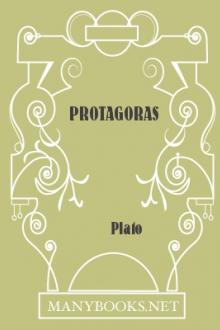
Protagoras
 Free Download
The Protagoras, like several of the Dialogues of Plato, is put into the mouth of Socrates, who describes a conversation which had taken place between himself and the great Sophist at the house of Callias. Translated by B. Jowett.
Book Excerpt
ks him unreasonable in not allowing Protagoras the liberty which he takes himself of speaking as he likes. But Alcibiades answers that the two cases are not parallel. For Socrates admits his inability to speak long; will Protagoras in like manner acknowledge his inability to speak short?
Counsels of moderation are urged first in a few words by Critias, and then by Prodicus in balanced and sententious language: and Hippias proposes an umpire. But who is to be the umpire? rejoins Socrates; he would rather suggest as a compromise that Protagoras shall ask and he will answer, and that when Protagoras is tired of asking he himself will ask and Protagoras shall answer. To this the latter yields a reluctant assent.
Protagoras selects as his thesis a poem of Simonides of Ceos, in which he professes to find a contradiction. First the poet says,
'Hard is it to become good,'
and then reproaches Pittacus for having said, 'Hard is it to be good.' How is this to be reconciled? Socrates, who is f
FREE EBOOKS AND DEALS
(view all)









Popular books in Philosophy, Fiction and Literature





More books by Plato
(view all)
Readers reviews
5.0
LoginSign up

Inspiring and promotes a crical thinking and expressions for ones ideas in the freeminded nature.
- Upvote (0)
- Downvote (0)