The Great Events by Famous Historians, Volume 13
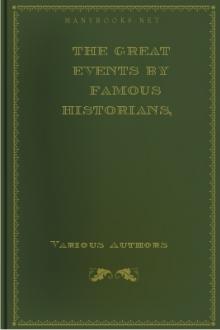
The Great Events by Famous Historians, Volume 13
 Free Download
A comprehensive and readable account of the world's history, emphasizing the more important events, and presenting these as complete narratives in the master-words of the most eminent historians. (This volume covers A.D. 1716-1775.)
Book Excerpt
inction of the line of the Spanish Hapsburgs had given rise to kingly jealousies and strife in 1700. Next the Austrian Hapsburgs, or at least the male line of them, became extinct in 1740. Their surviving representative was a daughter, a young and energetic woman, Maria Theresa, the "Empress Queen." Her father, the Emperor Charles VI, foreseeing the difficulties she must encounter, had during his lifetime made treaties with every important court of Europe, by which he yielded them valuable concessions in return for their guarantee that on his death his daughter should succeed to his throne and his possessions undisturbed. Her husband was to be made emperor.
The moment Charles was gone, every treaty was thrown to the winds, and every hand seemed extended by a common impulse to clutch what it could from a woman's weakness.[14] The first to move was Frederick II, King of Prussia, he whom his admirers have called the Great. He was a young man, he had just succeeded to the Prussian kingdom which his father
FREE EBOOKS AND DEALS
(view all)









Popular books in History


Readers reviews
0.0
LoginSign up
Be the first to review this book