The Education of Henry Adams
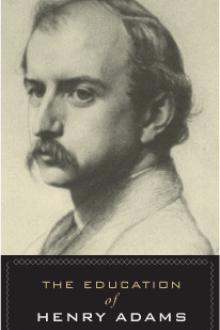
The Education of Henry Adams
 Free Download
At the utmost, the active-minded young man should ask of his teacher only mastery of his tools. The young man himself, the subject of education, is a certain form of energy; the object to be gained is economy of his force; the training is partly the clearing away of obstacles, partly the direct application of effort. Once acquired, the tools and models may be thrown away.The manikin, therefore, has the same value as any other geometrical figure of three or more dimensions, which is used for the study of relation. For that purpose it cannot be spared; it is the only measure of motion, of proportion, of human condition; it must have the air of reality; must be taken for real; must be treated as though it had life. Who knows? Possibly it had!
Book Excerpt
eemed always to think him so. Whatever was peculiar about him was education, not character, and came to him, directly and indirectly, as the result of that eighteenth-century inheritance which he took with his name.
The atmosphere of education in which he lived was colonial, revolutionary, almost Cromwellian, as though he were steeped, from his greatest grandmother's birth, in the odor of political crime. Resistance to something was the law of New England nature; the boy looked out on the world with the instinct of resistance; for numberless generations his predecessors had viewed the world chiefly as a thing to be reformed, filled with evil forces to be abolished, and they saw no reason to suppose that they had wholly succeeded in the abolition; the duty was unchanged. That duty implied not only resistance to evil, but hatred of it. Boys naturally look on all force as an enemy, and generally find it so, but the New Englander, whether boy or man, in his long struggle with a stingy or hostile universe,
FREE EBOOKS AND DEALS
(view all)










Popular books in Biography, History



More books by Henry Adams
(view all)

Readers reviews
5.0
LoginSign up

One of the great autobiographies, it's also one of the strangest: It's written in the third person, it's final chapters are an essay toward a theory of historical laws (to match the laws of the hard sciences), and it skips twenty years of the writer's life. This was due to the fact Adams wanted to avoid discussing his wife's suicide, an event not even his closest friends ever discussed with him. In fact, his wife is not even mentioned in the entire book. But all in all, these oddities are part of what make the book so appealing--as do such details as Adams describing his grandfather, John Quincy Adams, dragging him to school as a child. Worth the time to read.
- Upvote (0)
- Downvote (0)