Woman and the New Race
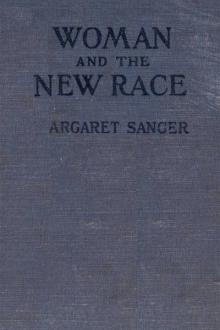
Woman and the New Race
 Free Download
The modern Woman Movement, like the modern Labour Movement, may be said to have begun in the Eighteenth century. The Labour movement arose out of the Industrial Revolution with its resultant tendency to over-population, to unrestricted competition, to social misery and disorder. The Woman movement appeared as an at first neglected by-product of the French Revolution with its impulses of general human expansion, of freedom and of equality. With a preface by Havelock Ellis.
Book Excerpt
earing and rearing of children has tried
desperately, frantically, too often in vain, to take and hold her
freedom.
Individual men have sometimes acquiesced in these violent measures, but in the mass they have opposed. By law, by religious canons, by public opinion, by penalties ranging all the way from ostracism to beheading, they have sought to crush this effort. Neither threat of hell nor the infliction of physical punishment has availed. Women have deceived and dared, resisted and defied the power of church and state. Quietly, desperately, consciously, they have marched to the gates of death to gain the liberty which the feminine spirit has desired.
In savage life as well as in barbarism and civilization has woman's instinctive urge to freedom and a wider development asserted itself in an effort, successful or otherwise, to curtail her family.
"The custom of infanticide prevails or has prevailed," says Westermark in his monumental work, _The Origin and Development of the Moral Idea_, "not only in
FREE EBOOKS AND DEALS
(view all)


















Popular books in Essays, Women's Studies, Non-fiction







More books by Margaret Sanger
(view all)


Readers reviews
5.0
LoginSign up

An interesting book by an early advocate of birth control. She classes abortion with infanticide as terrible crimes that can be prevented by birth control. Some of the book deals with the (current in 1920) obscenity laws wich prevented even doctors from mentioning sexual subject in books sent through the mail or by other carriers.
Her premise is that poverty, unemployment, labor unrest, crime, and war will all cease once every woman has control of the number of children she gives birth to. Only the wealthy had that option at that time.
Much of what she says is debatable (war has been with us longer than overpopulation,) but her statistics on infant mortality certainly hold up.
She was a strong voice that few people were comfortable hearing. The book is very well written.
Her premise is that poverty, unemployment, labor unrest, crime, and war will all cease once every woman has control of the number of children she gives birth to. Only the wealthy had that option at that time.
Much of what she says is debatable (war has been with us longer than overpopulation,) but her statistics on infant mortality certainly hold up.
She was a strong voice that few people were comfortable hearing. The book is very well written.
- Upvote (0)
- Downvote (0)