
The Half-Hearted
The Half-Hearted
 Free Download
To say that Mr. John Buchan's novel, The Half-Hearted, is a "psychological study," would be to arouse in the breasts of many novel readers a dark, but unfounded suspicion; to describe it as a splendid story of adventure would be paying tribute to but a part of its sterling merit, for it is a book far above the average, out of the common in conception, and very well written. Englishmen have been warning each other for some time against possible dangers at home and abroad, and this novel, whether that danger be imaginary or not, will probably be taken into consideraton as one of the ablest efforts in this direction, whatever be the need of its cry. But it will hold the attention of readers on this side of the Atlantic as well, for, apart from its purpose, it tells an excellent story, well bred in its early chapters, with the stamp of the true breeding of the English upper classes, remarkable for its descriptions of the Scotch country, while in its closing episode it tells as vivid a tale of intrigue and adventure as we have seen in many a day, closing with a critical episode in the history of England in India—a bit of prophesy and phantasy that is based so firmly upon present-day political possibilities that it may well be accepted as true.
Book Excerpt
ipating some gamekeeper or
shepherd.
"Lewie is my nephew. He lives at Etterick, up at the head of the glen."
Miss Afflint spoke for the first time. "A very good man. You should know Lewie, Miss Wishart. I'm sure you would like him. He is a great traveller, you know, and has written a famous book. Lewis Haystoun is his full name."
"Why, I have read it," cried Alice. "You mean the book about Kashmir. But I thought the author was an old man."
"Lewie is not very old," said his aunt; "but I haven't seen him for years, so he may be decrepit by this time. He is coming home soon, he says, but he never writes. I know two of his friends who pay a Private Inquiry Office to send them news of him."
Alice laughed and became silent. What merry haphazard people were these she had fallen among! At home everything was docketed and ordered. Meals were immovable feasts, the hour for bed and the hour for rising were more regular than the sun's. Her father was full of proverbs on the virtue of regularity, and was wo
FREE EBOOKS AND DEALS
(view all)



Popular books in Fiction and Literature, Romance, Adventure
More books by John Buchan
(view all)

Readers reviews
5.0
LoginSign up

This novel is the one most influenced by John Buchan's study of Greek tragedy. It is a haunting, heartbreaking novel of romance and duty, where the social expectations of the main characters shape the paths they tread. Thwarted happiness is painful to read at any time, but when it is described under the masterful hand of a clear-sighted writer, the reader's protesting heart is wrung again and again by the picture of what might have been. There is ultimate satisfaction in the conclusion of this novel, but it is the consummation of a tragedy played out in the cool, abstract air of Olympus, not the snug, personal triumph of the individual over the pea under the mattress. The principles of faithfulness to duty, and submerging oneself under the sea of the greater good are made tangible and accessible to the most unwilling reader. The higher calling of an exile's death seems to unite the key figure with all his countrymen in their many ill-matched contests over time. This painful revelation drives home the half-hearted nature in most of humanity, which prefers homely comforts to self-sacrificing effort. The conclusion of this work illumines a path of understanding that can reconcile the reader to put perspective on small disappointments and missed satisfactions in fiction and real life. The telescoping of the immensity of a single gifted man's death into a purposeful cog in the turning of the wheel of eternity is a foreign, yet broadening philosophy, which shakes the reader's complacency, willing or not. This book is a difficult one to enjoy, but a compelling one to contemplate.
Christine Drews
February 2001
www.johnbuchansociety.co.uk
Christine Drews
February 2001
www.johnbuchansociety.co.uk
- Upvote (0)
- Downvote (0)
Popular questions
(view all)Books added this week
(view all)
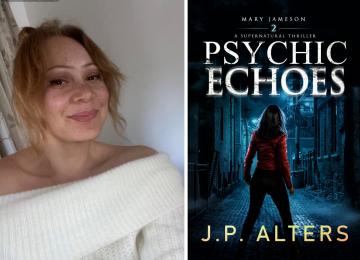
FEATURED AUTHOR - J.P. Alters is Jamaican/English and lives in the South-coast of England with her family. She currently divides her time between spending time with family and friends, and her work. When she's not writing supernatural thrillers, J.P. has two day jobs; working with a local homeless project, and mentoring students who are neuro-diverse. As our Author of the Day, she tells us all about her book, Psychic Echoes.