Huntingtower
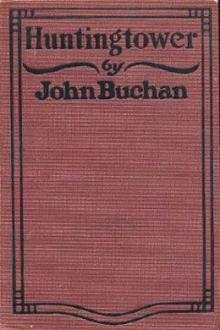
Huntingtower
 Free Download
In Huntingtower there is a retired Glasgow grocer who, starting out for a walking tour with a knapsack and a poetry book, finds himself, within twenty-four hours, up to the neck in one of the wildest plots of adventure it ever entered the heart of man to conceive. There is a beautiful Russian princess abducted by Bolsheviki and immured in the lonely castle by the sea; there are hidden jewels, a villainous innkeeper, with a gang of 'tinklers' keeping watch over the princess until the archvillain arrives in a Danish brig to carry off his helpless victim. How these wicked ones are outmanoeuvred and disposed of by the strategy of Dougal, the captain of a little company of Glasgow street-boys, the 'Gombal Diehards,' with the aid of our retired grocer and a romantic poet, picked up on the march — such is the staple of this fascinating tale of humor and adventure. Dougal is a boy of grit and strategy with no English peer, his nearest kin in fiction being Huck Finn; and the spirited old peasant, Mrs. Morran, will live with the best of Barrie.
Book Excerpt
character or for their historical pageantry, but because they gave him material wherewith to construct fantastic journeys. It was the same with Dickens. A lit tavern, a stage-coach, post-horses, the clack of hoofs on a frosty road, went to his head like wine. He was a Jacobite not because he had any views on Divine Right, but because he had always before his eyes a picture of a knot of adventurers in cloaks, new landed from France among the western heather.
On this select basis he had built up his small library--Defoe, Hakluyt, Hazlitt and the essayists, Boswell, some indifferent romances, and a shelf of spirited poetry. His tastes became known, and he acquired a reputation for a scholarly habit. He was president of the Literary Society of the Guthrie Memorial Kirk, and read to its members a variety of papers full of a gusto which rarely became critical. He had been three times chairman at Burns Anniversary dinners, and had delivered orations in eulogy of the national Bard; not because he greatly admi
FREE EBOOKS AND DEALS
(view all)

Tarthang Tulku
Free
$3.99







Popular books in Adventure, Fiction and Literature, Thriller
More books by John Buchan
(view all)



Readers reviews
4.3
LoginSign up

A fun, fast-paced but unlikely tale about the rescue of a beautiful Russian emigré princess from ravening Bolsheviks, Buchan's post-World War I novel would be pure melodrama if it weren't for the introspective musings and practicality of its unconventional Scots protagonist, Dickson McCunn, retired grocer. A ragtag gang of Glasgow street urchins, the Gorbals Die-Hards, and the indomitable Mrs. Phemie Morran, an "auld wife" of the hamlet where the action takes place, add charm and depth enough to transcend the novel's stock characters. Likewise, the page-turning action overcomes the holes, coincidences and clichés of the plot of this highly enjoyable mind candy.
- Upvote (1)
- Downvote (0)
Unusual and well-written mystery adventure with heroes and villains galore, and more than a few surprise twists.
Contains two or three or a half dozen unlikely coincidences and the ending is a bit frantic, but quite non-put-downable.
Contains two or three or a half dozen unlikely coincidences and the ending is a bit frantic, but quite non-put-downable.
12/16/2014
Peter Thackeray of www.johnbuchansociety.co.uk found this review from an unknown newspaper tucked away inside a first edition of this novel.
August 4th 1922
MR. BUCHAN'S LATEST ROMANCE
Huntingtower, by John Buchan.
(Hodder and Stoughton. 7s. 6d. net).
This story shows us Mr Buchan engaged in turning over and recombining into fresh groupings a heap of more or less familiar romantic 'properties'. His setting is the Scottish seacoast, and an untenanted mansion, in charge of a crew of surly, furtive lodgekeepers, who have something to hide, and betray the fact; and of a rough inn-keeper, who is desperately anxious to dissuade travellers from staying at his house.
They work under the direction of one Loudon, a factor, and a bluff, hearty, weather-tanned fellow, who makes the pleasantest impression of a wholesome open-air sportsman, till at length, we are allowed to detect in him just a fugitive gleam of something faintly suspicious. Loudon is good, in the traditional manner. There is a Danish brig, and a landing by a boat's crew of villains by night, and in stormy weather. There is, inevitably, a beautiful foreign girl, suitably provided with unscrupulous enemies, and with an unwelcome lover, 'beautiful as a devil,' who will stick at nothing. For the necessary contrast of the prosaic with the picturesque there is a middle-aged and wealthy Glasgow grocer, timid and respectable by habit, though a stout-hearted fellow at bottom, who has sold his business and blunders into this whirl of picturesque violence at the bidding of a life-long passion for romance, which his retirement has set him free at last to indulge.
Dickson McCunn has many engaging qualities besides his simplicity and kindliness. He has a harmless vanity which makes him thrill with pride when he over hears praises of 'D. McCunn, the great provision merchant', a praiseworthy habit of carrying Izaak Walton in his pocket when he goes on pilgrimage, and an invincible belief that what is needed to defeat the lovely foreigner's enemies is the 'sound business head' which has brought him his prosperity and modest fame.
As a piquant novelty Mr. Buchan has hit upon the device of introducing a band of ragged Glasgow lads, formed into an unofficial body of boy scouts. In the exuberance of their youth, they march to such songs as 'Class-conscious are we, and class-conscious wull be, Till our fit's on the neck of the Boorjoyzee', learned by one of their members at a Socialist Sunday school. But these are battle hymns, sung for the sake of their rhythm, without regard to their meaning, and the boys are unreservedly, not to say violently, on the side of law and order. They are amusing; but we wish Mr. Buchan could have made his villains anything but Bolshevists. The Bolshevist crops up in every shocker nowadays; but for romantic value he is, say, to the old-fashioned pirate, as a penny is to a pound. His associations are not picturesque at all, but merely ugly, and as a figure of romance he stands far below even the nihilist of a generation ago, who figured bravely enough in many of the older stories.
August 4th 1922
MR. BUCHAN'S LATEST ROMANCE
Huntingtower, by John Buchan.
(Hodder and Stoughton. 7s. 6d. net).
This story shows us Mr Buchan engaged in turning over and recombining into fresh groupings a heap of more or less familiar romantic 'properties'. His setting is the Scottish seacoast, and an untenanted mansion, in charge of a crew of surly, furtive lodgekeepers, who have something to hide, and betray the fact; and of a rough inn-keeper, who is desperately anxious to dissuade travellers from staying at his house.
They work under the direction of one Loudon, a factor, and a bluff, hearty, weather-tanned fellow, who makes the pleasantest impression of a wholesome open-air sportsman, till at length, we are allowed to detect in him just a fugitive gleam of something faintly suspicious. Loudon is good, in the traditional manner. There is a Danish brig, and a landing by a boat's crew of villains by night, and in stormy weather. There is, inevitably, a beautiful foreign girl, suitably provided with unscrupulous enemies, and with an unwelcome lover, 'beautiful as a devil,' who will stick at nothing. For the necessary contrast of the prosaic with the picturesque there is a middle-aged and wealthy Glasgow grocer, timid and respectable by habit, though a stout-hearted fellow at bottom, who has sold his business and blunders into this whirl of picturesque violence at the bidding of a life-long passion for romance, which his retirement has set him free at last to indulge.
Dickson McCunn has many engaging qualities besides his simplicity and kindliness. He has a harmless vanity which makes him thrill with pride when he over hears praises of 'D. McCunn, the great provision merchant', a praiseworthy habit of carrying Izaak Walton in his pocket when he goes on pilgrimage, and an invincible belief that what is needed to defeat the lovely foreigner's enemies is the 'sound business head' which has brought him his prosperity and modest fame.
As a piquant novelty Mr. Buchan has hit upon the device of introducing a band of ragged Glasgow lads, formed into an unofficial body of boy scouts. In the exuberance of their youth, they march to such songs as 'Class-conscious are we, and class-conscious wull be, Till our fit's on the neck of the Boorjoyzee', learned by one of their members at a Socialist Sunday school. But these are battle hymns, sung for the sake of their rhythm, without regard to their meaning, and the boys are unreservedly, not to say violently, on the side of law and order. They are amusing; but we wish Mr. Buchan could have made his villains anything but Bolshevists. The Bolshevist crops up in every shocker nowadays; but for romantic value he is, say, to the old-fashioned pirate, as a penny is to a pound. His associations are not picturesque at all, but merely ugly, and as a figure of romance he stands far below even the nihilist of a generation ago, who figured bravely enough in many of the older stories.
12/04/2005