Bleak House
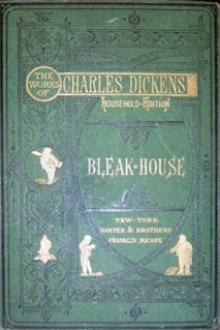
Bleak House
 Free Download
The story concerns a long-running legal dispute which has far-reaching consequences for all involved, and serves as Dickens' assault on the flaws of the British judiciary system (based in part on his own experiences as a law clerk). The author's harsh characterization of the slow, arcane Chancery law process gave voice to widespread frustration with the system, helping to set the stage for its eventual reform in the 1870s.
Book Excerpt
kind. Chizzle, Mizzle, and otherwise have lapsed into a habit of vaguely promising themselves that they will look into that outstanding little matter and see what can be done for Drizzle--who was not well used--when Jarndyce and Jarndyce shall be got out of the office. Shirking and sharking in all their many varieties have been sown broadcast by the ill-fated cause; and even those who have contemplated its history from the outermost circle of such evil have been insensibly tempted into a loose way of letting bad things alone to take their own bad course, and a loose belief that if the world go wrong it was in some off-hand manner never meant to go right.
Thus, in the midst of the mud and at the heart of the fog, sits the Lord High Chancellor in his High Court of Chancery.
"Mr. Tangle," says the Lord High Chancellor, latterly something restless under the eloquence of that learned gentleman.
"Mlud," says Mr. Tangle. Mr. Tangle knows more of Jarndyce and Jarndyce than anybody. He is famous f
FREE EBOOKS AND DEALS
(view all)
JJ Richards
$0.99
$3.99
Popular books in Fiction and Literature

More books by Charles Dickens
(view all)
Readers reviews
4.9
LoginSign up

An excellent novel. Do not let the length (900 pages or so) scare you away. The novel flows by smoothly and you'll be near the end very quickly.
The writing is crisp and evocative. It has an interesting story, with many social commentary themes laden inside (as almost Dickens' novels do).
The only warning I will give is that there are a ton of characters, about 20-25. and all of them matter. You will have consult a character-list online to keep track of them.
The writing is crisp and evocative. It has an interesting story, with many social commentary themes laden inside (as almost Dickens' novels do).
The only warning I will give is that there are a ton of characters, about 20-25. and all of them matter. You will have consult a character-list online to keep track of them.
- Upvote (0)
- Downvote (0)
I had to read Dickens (Great Expectations) in high school and hated it. So, thank you all you reviewers who made me want to read Bleak House. I loved it. One of the best books I have read in a long time - and I am a voracious reader.
01/21/2012
I was first turned on to this wonderful book by Charles Dickens when I saw the TV rendition with Gillian Anderson. I was so captivated by the story-line that I had to purchase the book. Though at times the story can drag on or be long-winded, the overall feeling that comes from reading this book is nothing short of sheer bliss.
08/05/2009
It goes like this
You are introduced to a myriad of characters. These characters, display the full spectrum of the human condition: from wealthy to wretched, from saint to sinner, from wise to simple, from respected to scorned, from arrogant to humble from solid to eccentric...
Yet these characters are not one dimensional. While, their nature remains apparent their behavior twist and turns.
Slowly, as you become acquainted, you become aware of mysteries lurking in their separate backgrounds.
As your knowledge of the characters deepen the mysteries grow. The characters and the mysteries begin to entwine and from the entanglement a story emerges.
A great story, told with Dickens social insights, irascible characters and gentle humor.
Yes, you should read this.
Definitely
You are introduced to a myriad of characters. These characters, display the full spectrum of the human condition: from wealthy to wretched, from saint to sinner, from wise to simple, from respected to scorned, from arrogant to humble from solid to eccentric...
Yet these characters are not one dimensional. While, their nature remains apparent their behavior twist and turns.
Slowly, as you become acquainted, you become aware of mysteries lurking in their separate backgrounds.
As your knowledge of the characters deepen the mysteries grow. The characters and the mysteries begin to entwine and from the entanglement a story emerges.
A great story, told with Dickens social insights, irascible characters and gentle humor.
Yes, you should read this.
Definitely
02/21/2009
The legal case that provides the background to Bleak House is less memorable than the unforgettable assortment of characters, delineated with masterful word pictures, that are liberally scattered through it. This book is definitely not an easy read. But at the conclusion the reader is left with a vivid ringside-view impression of 19th century England and English society, at different levels, that neither history books nor paintings or photographs could have provided.
03/27/2008
Very moving. Record number of pages.
04/13/2007
This is my favorite of the Dickens novels. It is crammed with a variety of interesting characters and incidents in sturdy plot. All of us have known people like one or another of his memorable cast. The outcome of the probate battle on which the fortunes of its contestants depend was a surprise that left me laughing out loud.
(Only later did I find that, in another case of art copying life, it mirrors the outcome of the centuries long fight over the estate of Ferdinand Magellan.)
If you love Dickens, this is a must read. It is one of those books you know you must someday read again.
(Only later did I find that, in another case of art copying life, it mirrors the outcome of the centuries long fight over the estate of Ferdinand Magellan.)
If you love Dickens, this is a must read. It is one of those books you know you must someday read again.
03/10/2007