
The German Classics of The Nineteenth and Twentieth Centuries, Vol. X.
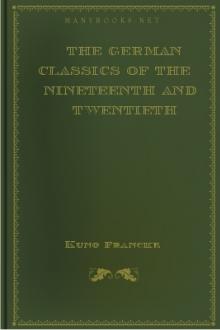
The German Classics of The Nineteenth and Twentieth Centuries, Vol. X.
Prince Otto Von Bismarck, Count Helmuth Von Moltke, Ferdinand Lassalle
 Free Download
Book Excerpt
Prince Otto Von Bismarck
Bismarck as a National Type. By Kuno Francke.
The Love Letters of Bismarck. Translated under the supervision of Charlton T. Lewis.
Correspondence of William I. and Bismarck. Translated by J.A. Ford.
From "Thoughts and Recollections." Translated under the supervision of A.J. Butler.
Bismarck as an Orator. By Edmund von Mach.
Bismarck as a National Type. By Kuno Francke.
The Love Letters of Bismarck. Translated under the supervision of Charlton T. Lewis.
Correspondence of William I. and Bismarck. Translated by J.A. Ford.
From "Thoughts and Recollections." Translated under the supervision of A.J. Butler.
Bismarck as an Orator. By Edmund von Mach.
Speeches of Prince Bismarck. Translated by Edmund von Mach:
Professorial Politics
Speech from the Throne
Alsace-Lorraine a Glacis Against France
We Shall Never Go to Canossa!
Bismarck as the "Honest Broker"
Salus Publica--Bismarck's Only Lode-Star
Practical Christianity
We Germans Fear God, and Nought Else in the World
Mount the Guards at the Warthe and the Vistula!
Long Live the Emperor and the Empire!
Count Helmuth Von Moltke
The Life of Moltke. By Karl Detlev Jessen.
Letters and Historical Writings of Moltke:
The Political and Military Conditions of the Ottoman Empire in 1836. Translated by Edmund von Mach.
A Trip to Brussa. Translated by Edmund von Mach.
A Journey to Mossul. Translated by Edmund von Mach.
A Bullfight in Spain. Translated by Edmund von Mach.
Description of Moscow. Translated by Grace Bigelow.
The Peace Movement. Translated by Edmund von Mach.
Fighting on the Frontier. Translated by Clara Bell and Henry W. Fischer.
Battle of Gravelotte--St. Privat. Translated by Clara Bell and Henry W. Fischer.
Consolatory Thoughts on the Earthly Life and a Future Existence. Translated by Mary Herms.
Ferdinand Lassalle
The Life and Work of Ferdinand Lassalle. By Arthur N. Holcombe.
The Workingmen's Programme. Translated by E.H. Babbitt.
Science and the Workingmen. Translated by Thorstein B. Veblen.
Open Letter to the Central Committee. Translated by E.H. Babbitt.
FREE EBOOKS AND DEALS
(view all)





Popular books in Classic, Fiction and Literature

Readers reviews
0.0
LoginSign up
Be the first to review this book
Popular questions
(view all)Books added this week
(view all)

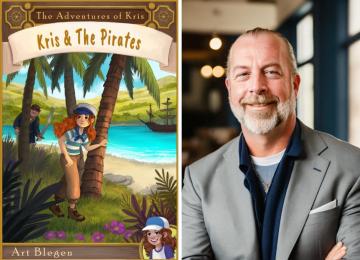
FEATURED AUTHOR - Art Blegen is the author of “The Adventures of Kris”, a series of early middle-grade chapter books for young readers from six to ten years old. Each child is important, and each family matters to Art. He is an advocate for educating children and their parents to ensure they have a healthy balance of positive examples in their lives. Wholesome stories and a healthy imagination can lay the foundation they will use for the rest of their lives. Whether playing with his grandchildren or coaching… Read more