In the Clutch of the War-God
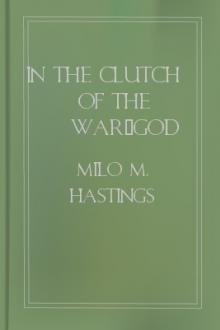
In the Clutch of the War-God
The Tale of the Orient's Invasion of the Occident, as Chronicled in the Humaniculture Society's ''History of the Twentieth Century''
 Free Download
FOREWORD: In this strange story of another day, the author has ''dipped into the future'' and viewed with his mind's eye the ultimate effect of America's self-satisfied complacency, and her persistent refusal to heed the lessons of Oriental progress. I can safely promise the reader who takes up this unique recital of the twentieth century warfare, that his interest will be sustained to the very end by the interesting deductions and the keen insight into the possibilities of the present trend of international affairs exhibited by the author.--Bernarr Macfadden.
Book Excerpt
e
restriction the percentage of those who reached the legal standard
of fitness was naturally increased. The scientists and officials had
from time to time considered the advisability of increasing the
restrictions--and yet why should they? The Japanese people had
submitted to the prohibition of the marriage of the unfit, but they
loved children; and, with their virile outdoor life, the instinct of
procreation was strong within them. True, the assignable lands in
Japan continued to grow smaller, but what reason was there for
stifling the reproductive instincts of a vigorous people in a great
unused world half populated by a degenerate humanity?
So Japan was land hungry--not for lands to conquer, as of old, nor yet for lands to exploit commercially, but for food and soil and breathing space for her children.
Among opponents of Japanese racial expansion, the United States was the greatest offender. Japanese immigration had long since been forbidden by the United States, and American diplomats had more rec
FREE EBOOKS AND DEALS
(view all)








Popular books in Science Fiction, War, Fiction and Literature



More books by Milo M. Hastings
(view all)
Readers reviews
1.5
LoginSign up

The prior reviewer nailed this one, so I want repeat details. I'll only say that the story is boring - very little action. Also, it is just plain silly in the way it portrays Japanese as benign people who just want more land. They invade they U.S. by threatening the people and cause them to vacate their homes. There is no bloodshed or war per se. The Americans wait 4 weeks before responding. It's all preposterous, and I quit reading after two chapters.
- Upvote (0)
- Downvote (0)
An interesting artifact from 1911. It warns of the coming (in 1958) world war between Japan and the U.S. It correctly predicts a Japanese attack from aircraft carriers, but selects Beaumont, Texas as the initial target.
It idealizes the Japanese, showing them as scientific, thoughtful, resourceful, and benign conquerers. The Americans are dissolute, selfish, wasteful, racist, and meek. Quite a lot is made of American drinking (this was before prohibition).
Clearly the story was politically motivated, telling the U.S. to change its ways or suffer the consequences.
It idealizes the Japanese, showing them as scientific, thoughtful, resourceful, and benign conquerers. The Americans are dissolute, selfish, wasteful, racist, and meek. Quite a lot is made of American drinking (this was before prohibition).
Clearly the story was politically motivated, telling the U.S. to change its ways or suffer the consequences.
07/26/2013