The Argonautica
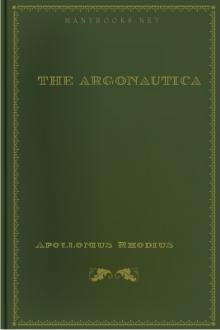
The Argonautica
 Free Download
Book Excerpt
ce of everything commonplace in subject,
sentiment or allusion." These traits are more prominent in
Callimachus than in Apollonius, but they are certainly to be seen
in the latter. He seems to have written the "Argonautica" out of
bravado, to show that he could write an epic poem. But the
influence of the age was too strong. Instead of the unity of an
Epic we have merely a series of episodes, and it is the great
beauty and power of one of these episodes that gives the poem its
permanent value--the episode of the love of Jason and Medea.
This occupies the greater part of the third book. The first and
second books are taken up with the history of the voyage to
Colchis, while the fourth book describes the return voyage.
These portions constitute a metrical guide book, filled no doubt
with many pleasing episodes, such as the rape of Hylas, the
boxing match between Pollux and Amyeus, the account of Cyzicus,
the account of the Amazons, the legend of Talos, but there is no
unity running through the poem beyond
FREE EBOOKS AND DEALS
(view all)






Popular books in Classic, Fiction and Literature





Readers reviews
5.0
LoginSign up

The preface is a bit long and sometimes dense, still it provides very interesting insights on the text.
The Argonautica itself is most enjoyable. The Argonauts' tale was always a favourite of mine (thanks to the 1963 movie), and I was excited to find the original text has the rhythm of the film. First class adventure, although it would have been nice Apollonius Rhodius had gone deeper into some aspects he judges non vital to his story. The portrayal of Medea as a pawn in the gods' games and the remorse that consumes her is moving.
The Argonautica itself is most enjoyable. The Argonauts' tale was always a favourite of mine (thanks to the 1963 movie), and I was excited to find the original text has the rhythm of the film. First class adventure, although it would have been nice Apollonius Rhodius had gone deeper into some aspects he judges non vital to his story. The portrayal of Medea as a pawn in the gods' games and the remorse that consumes her is moving.
- Upvote (0)
- Downvote (0)