
Weir of Hermiston
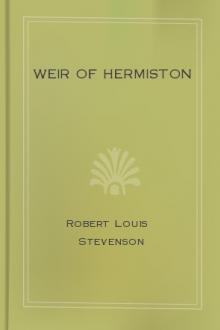
Weir of Hermiston
An Unfinished Romance
 Free Download
With the words last printed "a wilful convulsion of brute nature," the romance of Weir of Hermiston breaks off. They were dictated, I believe, on the very morning of the writer's sudden seizure and death. Weir of Hermiston thus remains in the work of Stevenson what Edwin Drood is in the work of Dickens, or Denis Duval in that of Thackeray, or rather it remains relatively more--for if each of those fragments holds an honourable place among its author's writings, among Stevenson's the fragment of Weir holds certainly the highest.
Book Excerpt
that--she kens it well, dearie!" And so slid off to safer topics, and left on the mind of the child an obscure but ineradicable sense of something wrong.
Mrs. Weir's philosophy of life was summed in one expression--tenderness. In her view of the universe, which was all lighted up with a glow out of the doors of hell, good people must walk there in a kind of ecstasy of tenderness. The beasts and plants had no souls; they were here but for a day, and let their day pass gently! And as for the immortal men, on what black, downward path were many of them wending, and to what a horror of an immortality! "Are not two sparrows," "Whosoever shall smite thee," "God sendeth His rain," "Judge not, that ye be not judged"--these texts made her body of divinity; she put them on in the morning with her clothes and lay down to sleep with them at night; they haunted her like a favourite air, they clung about her like a favourite perfume. Their minister was a marrowy expounder of the law, and my lord sat under him with r
FREE EBOOKS AND DEALS
(view all)
Popular books in Adventure, Fiction and Literature
More books by Robert Louis Stevenson
(view all)
Readers reviews
0.0
LoginSign up
Be the first to review this book
Popular questions
(view all)Books added this week
(view all)
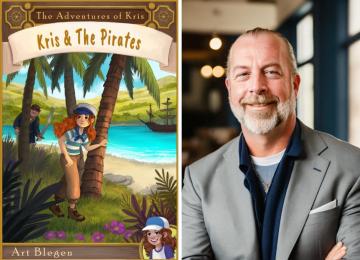
FEATURED AUTHOR - Art Blegen is the author of “The Adventures of Kris”, a series of early middle-grade chapter books for young readers from six to ten years old. Each child is important, and each family matters to Art. He is an advocate for educating children and their parents to ensure they have a healthy balance of positive examples in their lives. Wholesome stories and a healthy imagination can lay the foundation they will use for the rest of their lives. Whether playing with his grandchildren or coaching… Read more