
A Mysterious Disappearance
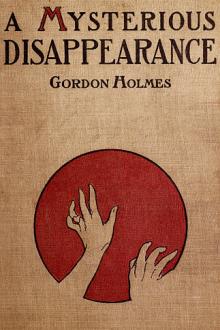
A Mysterious Disappearance
 Free Download
Gordon Holmes has a happy method in the way he talks to his readers. He takes something for granted instead of spinning out to a fine point every single idea.He gives us two diametrically opposite characters in his two detectives—the Scotland Yard man and the amateur. Then he gives his readers the same clues the detectives have in Lady Dyke's disappearance.No reader can resist the subtle invitation to speculate as to what has happened and is going to happen. It is a most involved tangle.
Book Excerpt
Bruce read:
"I opened your message. Alice not here. I have not seen her for over a week. What do you mean by wire? Am coming to town at once.--EDITH."
The baronet's pale face and strained voice betrayed the significance of the thought underlying the simple question.
"What do you make of it, Claude?"
Bruce, too, was very grave. "The thing looks queer," he said; "though the explanation may be trifling. Come, I will help you. Let us reach your house. It is the natural centre for inquiries."
They hailed a hansom and whirled off to Portman Square. They did not say much. Each man felt that the affair might not end so happily and satisfactorily as he hoped.
CHAPTER II
INSPECTOR WHITE
Lady Dyke had disappeared.
Whether dead or alive, and if alive, whether detained by force or absent of her own unfettered volition, this handsome and well-known leader of Society had vanished utterly from the moment when Cl
FREE EBOOKS AND DEALS
(view all)












Popular books in Fiction and Literature, Mystery/Detective





More books by Louis Tracy
(view all)


Readers reviews
3.4
LoginSign up

Would have enjoyed this more had the characters been humans instead of angels brought down to earth, and had I not guessed the perp so soon. Still, I read it to the end with very little skipping, so it has some merit.
Typical premise, though—stupid policeman and brilliant amateur, each of whom go about matters in a highly lackadaisical manner and leave apparent clues unexamined. It's obvious they've watched neither Forensic Files nor 48 Hours.
Typical premise, though—stupid policeman and brilliant amateur, each of whom go about matters in a highly lackadaisical manner and leave apparent clues unexamined. It's obvious they've watched neither Forensic Files nor 48 Hours.
- Upvote (0)
- Downvote (0)
A clever and suspenseful story, a complexe intrigue, interesting characters and magnificent central personnage, a lawyer detective, who works in a taciturne and reflexive manner.
There are also some curious secondary argumental lines.
Most characters are as interesting to know and to follow as the intrigue itself.
A highly enjoyable and intense read.
There are also some curious secondary argumental lines.
Most characters are as interesting to know and to follow as the intrigue itself.
A highly enjoyable and intense read.
05/21/2015
Instead of Tracy's earlier sleuth, Reggie Brett, the barrister/detective in this engrossing mystery is Claude Bruce. He's just as clever as Brett and just as amused at the bungling single-mindedness of Scotland Yard, but less self-confident and not so inclined to Sherlock Holmes-style deductions. The case involves a friend of his, Sir Charles Dyke, whose wife has unaccountably disappeared — coincidentally, just after Bruce himself encountered her at a train station. What became of her? Bruce thinks she's dead. He follows many twists and turns before discovering the truth. Tracy throws out clues and red herrings with abandon. Have fun!
02/26/2015
(1905)Mystery / Master detective
R: ***
Plot bullets
As a lawyer and friend, a woman asks advice after a chance meeting.
She won't reveal much, so he can't help.
She is never seen alive again.
He has a reputation for sleuthing, so he sets out to solve the mystery.
R: ***
Plot bullets
As a lawyer and friend, a woman asks advice after a chance meeting.
She won't reveal much, so he can't help.
She is never seen alive again.
He has a reputation for sleuthing, so he sets out to solve the mystery.
10/02/2013
A British Lady steps onto a train and disappears. Is she dead? Run away? Complicated by false identities and British Victorian era fear of scandal. Not bad, but would have been better if author was French!
12/04/2011
Popular questions
(view all)Books added this week
(view all)



FEATURED AUTHOR - Catalina Du Bois resides in the southwestern United States, where she finds inspiration from the enchanting landscapes of the desert. With a penchant for motorcycles, camping trips, and crafting romantic mysteries, Catalina is known for her candid and unfiltered writing style. Despite her reluctance to tout awards and accolades, Catalina's love for storytelling shines through in her works.