The Last Days of Pompeii
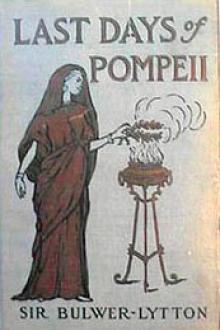
The Last Days of Pompeii
 Free Download
A classical romance is always a difficult form of art, but Lord Lytton's is easily the most successful. He does not overload his narrative with antiquarian details, and the story moves rapidly to its great climax. It is a brilliant and imaginative picture of the later Roman civilization.
Book Excerpt
fancy and design.
The sparkling fountains, that at every vista threw upwards their grateful
spray in the summer air; the crowd of passengers, or rather loiterers,
mostly clad in robes of the Tyrian dye; the gay groups collected round each
more attractive shop; the slaves passing to and fro with buckets of bronze,
cast in the most graceful shapes, and borne upon their heads; the country
girls stationed at frequent intervals with baskets of blushing fruit, and
flowers more alluring to the ancient Italians than to their descendants
(with whom, indeed, "latet anguis in herba," a disease seems lurking in
every violet and rose); the numerous haunts which fulfilled with that idle
people the office of cafes and clubs at this day; the shops, where on
shelves of marble were ranged the vases of wine and oil, and before whose
thresholds, seats, protected from the sun by a purple awning, invited the
weary to rest and the indolent to lounge--made a scene of such glowing and
vivacious excitement, as might well give the Ath
FREE EBOOKS AND DEALS
(view all)













Popular books in Fiction and Literature











More books by Baron Lytton Edward Bulwer Lytton
(view all)



Readers reviews
5.0
LoginSign up

Good
- Upvote (0)
- Downvote (0)