
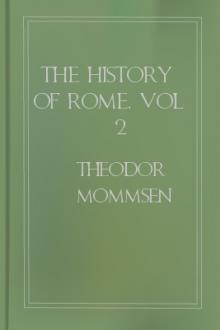
The History of Rome, vol 2
The History of Rome, vol 2
From the Abolition of the Monarchy in Rome to the Union of Italy
 Free Download
Book Excerpt
as lost in the case of the consul. It is true that the king was always in the Roman commonwealth subject, and not superior, to the law; but, as according to the Roman view the supreme judge could not be prosecuted at his own bar, the king might doubtless have committed a crime, but there was for him no tribunal and no punishment. The consul, again, if he had committed murder or treason, was protected by his office, but only so long as it lasted; on his retirement he was liable to the ordinary penal jurisdiction like any other burgess.
To these leading changes, affecting the principles of the constitution, other restrictions were added of a subordinate and more external character, some of which nevertheless produced a deep effect The privilege of the king to have his fields tilled by task-work of the burgesses, and the special relation of clientship in which the --metoeci-- as a body must have stood to the king, ceased of themselves with the life tenure of the office.
Right Of Appeal
Hithe
FREE EBOOKS AND DEALS
(view all)















Popular books in History







More books by Theodor Mommsen
(view all)




Readers reviews
0.0
LoginSign up
Be the first to review this book
Popular questions
(view all)Books added this week
(view all)
No books found

FEATURED AUTHOR - D. Lynn Robinson is a mom of five and has been writing fiction all her life, and publishing novels since 2019. A lover of the outdoors, she enjoys hiking, swimming, and warm sandy beaches. When she’s not in the water, you can find her horseback riding with her husband Joe on one of the many trails Idaho has to offer. The Last Indigo and the Beast of Epicerra is her first fantasy chapter book, and a project deeply important to her. She believes that great stories have the power to enrich lives… Read more